Lexton McDermott

UX & UI Design for Real Estate & Management
OVERVIEW

Lexton McDermott is a Denver-based property management company serving investors, residents, and commercial partners across Colorado. Their existing website no longer reflected the credibility and sophistication their client base expected. I led the full engagement from initial sale through delivery: managing the client relationship, defining the brand strategy, designing the UX and UI, and directing the developer through build and launch.
MY ROLE

CREATIVE DIRECTION

CLIENT RELATIONSHIP & SALES

UX STRATEGY & DESIGN

UI DESIGN

DEVELOPER DIRECTION

THE CHALLENGE

Credibility gap

Lexton's outdated site was creating friction with the exact audience they needed to impress: investors evaluating properties and partners assessing the firm. The design did not match the quality of their portfolio or the trust their brand required.

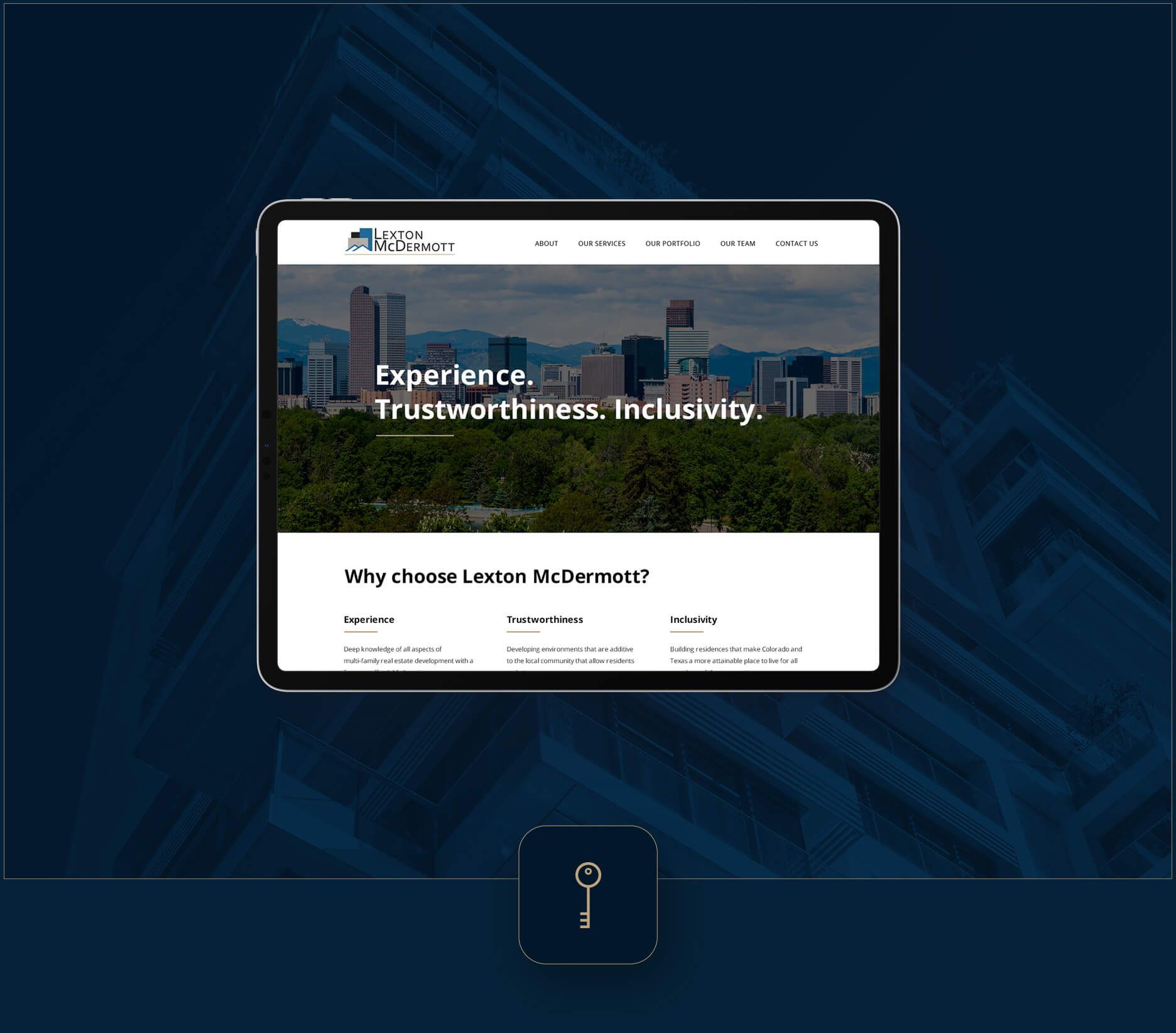
Website homepage mockup on a laptop over a dark blue tech background with a key icon below.
UI DESIGN

Modern. Authoritative. On brand.

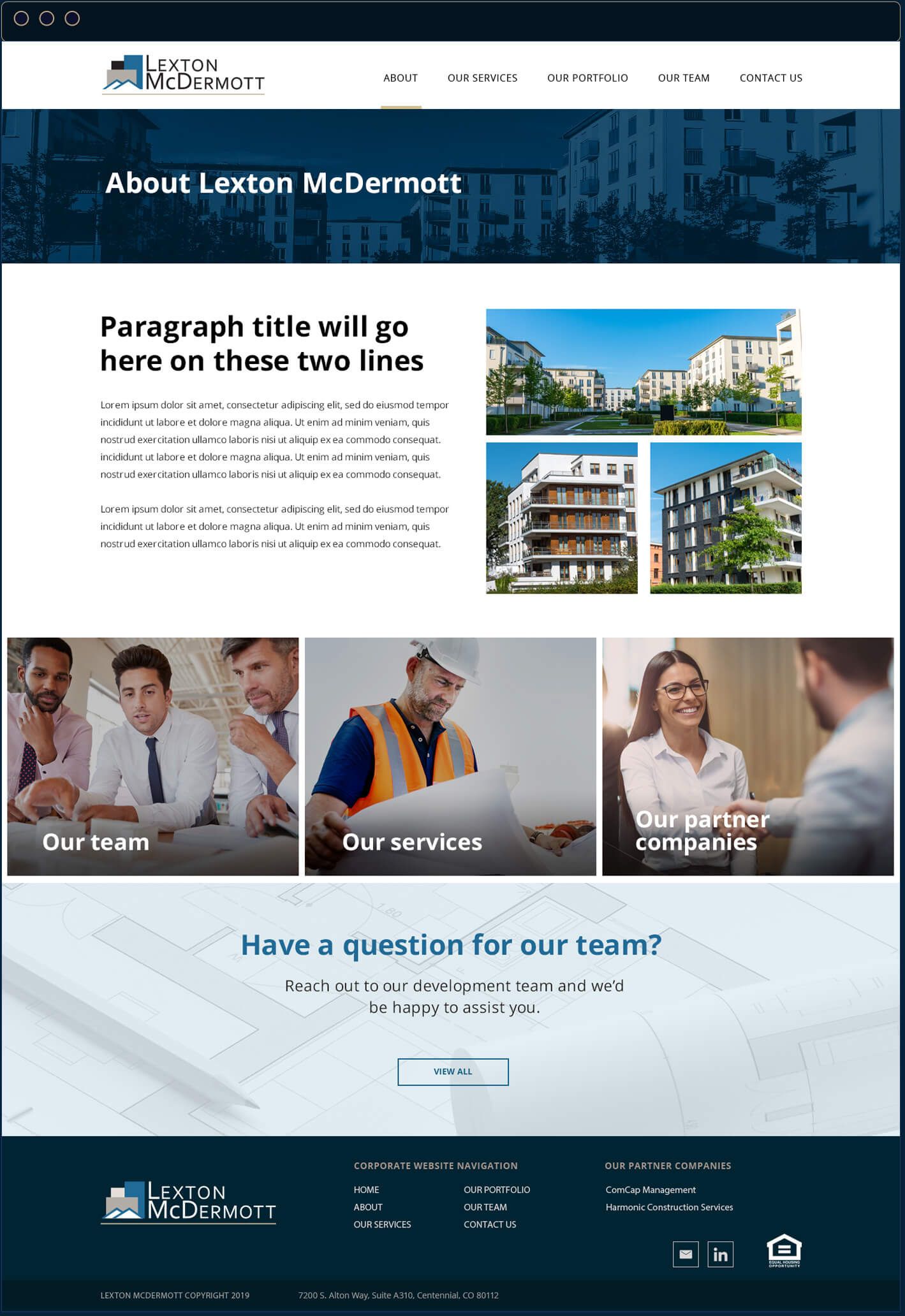
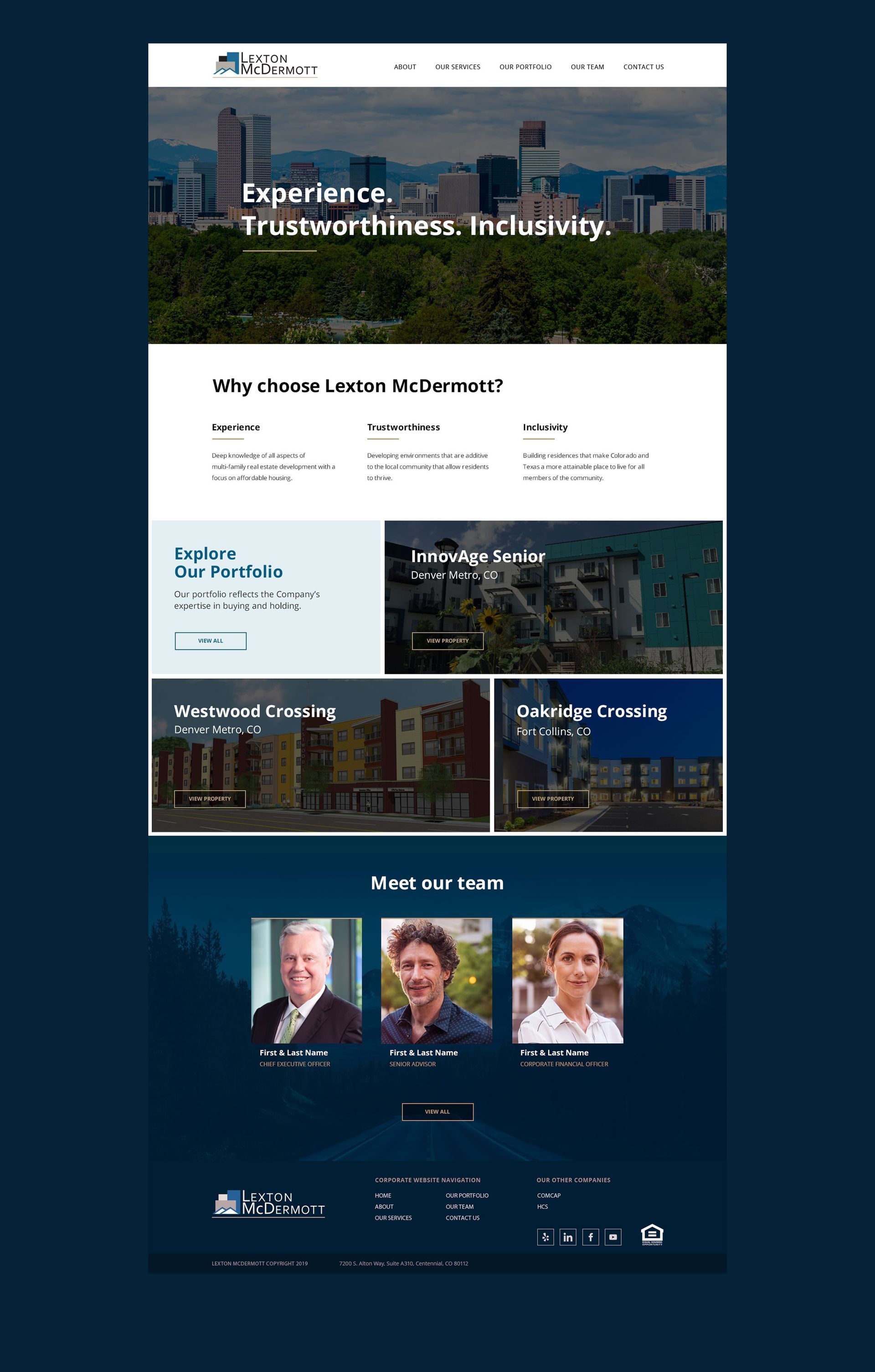
Every visual decision was grounded in Lexton's existing brand guide while pushing the aesthetic forward. Dark navy, clean property photography, and a structured grid gave the site the weight and confidence the firm's reputation demanded.

Website homepage with a hero banner, service tiles, and team headshots on a blue-white layout
Gold outline of a tablet and smartphone on a dark blue rounded-square icon
RESPONSIVE DESIGN

Built for every screen.

The site was designed and developed to perform across desktop, tablet, and mobile without compromising layout integrity or visual quality.

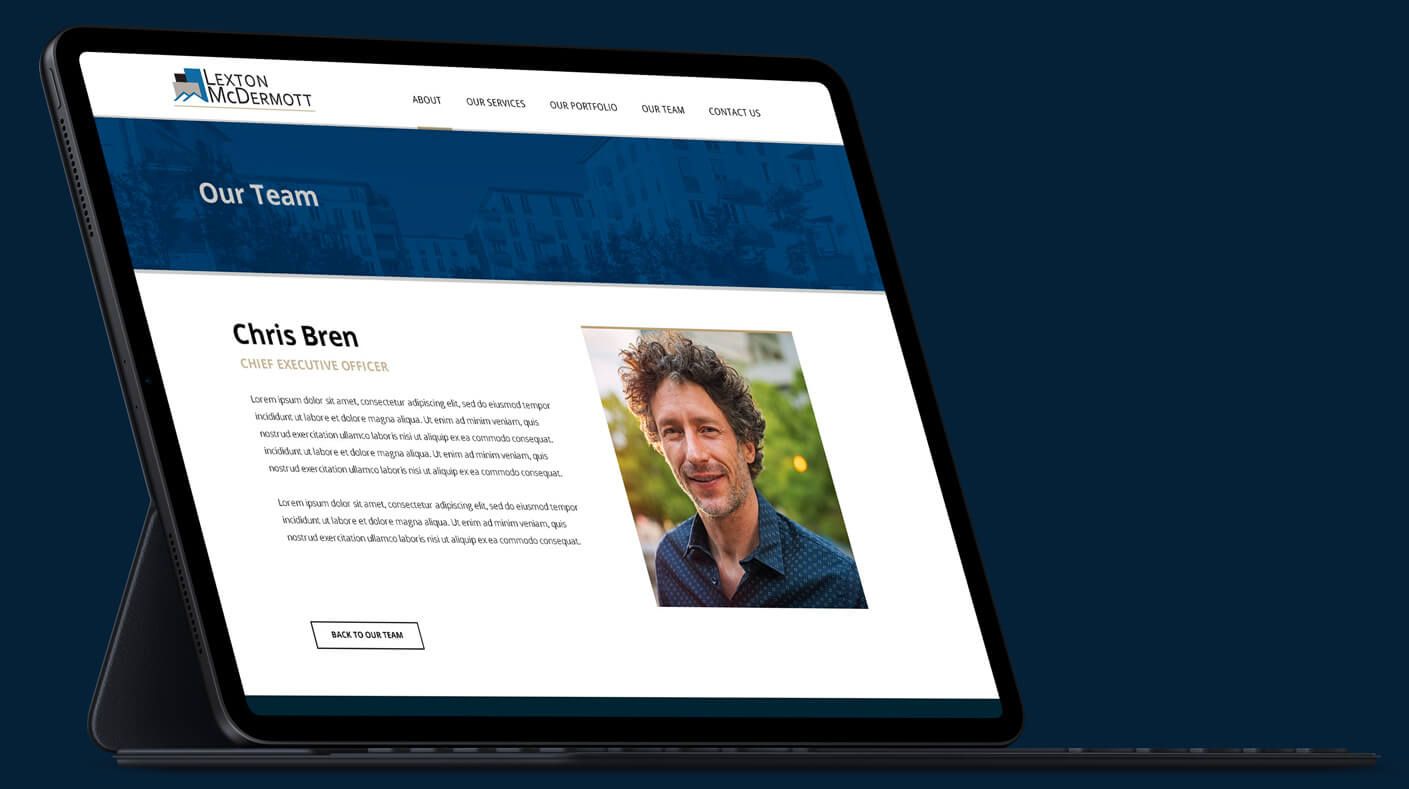
Laptop displaying a team webpage with a blue header and a staff profile photo
Hospital website homepage with campus photos, care team images, and a central call-to-action button
the results

A full visual overhaul replaced an outdated site with a design that matched the caliber of Lexton's portfolio and the expectations of their investor audience.


Restructured navigation and investor-focused page flow reduced friction and improved engagement with key portfolio and team content.


One year post-launch, web conversions increased by 74%, a direct result of a UX architecture built around the investor decision journey.